
Planetary scientists from Freie Universität Berlin have published two new studies that indicate that a spacecraft could identify evidence of life much more easily than previously thought.
Source: www.universetoday.com
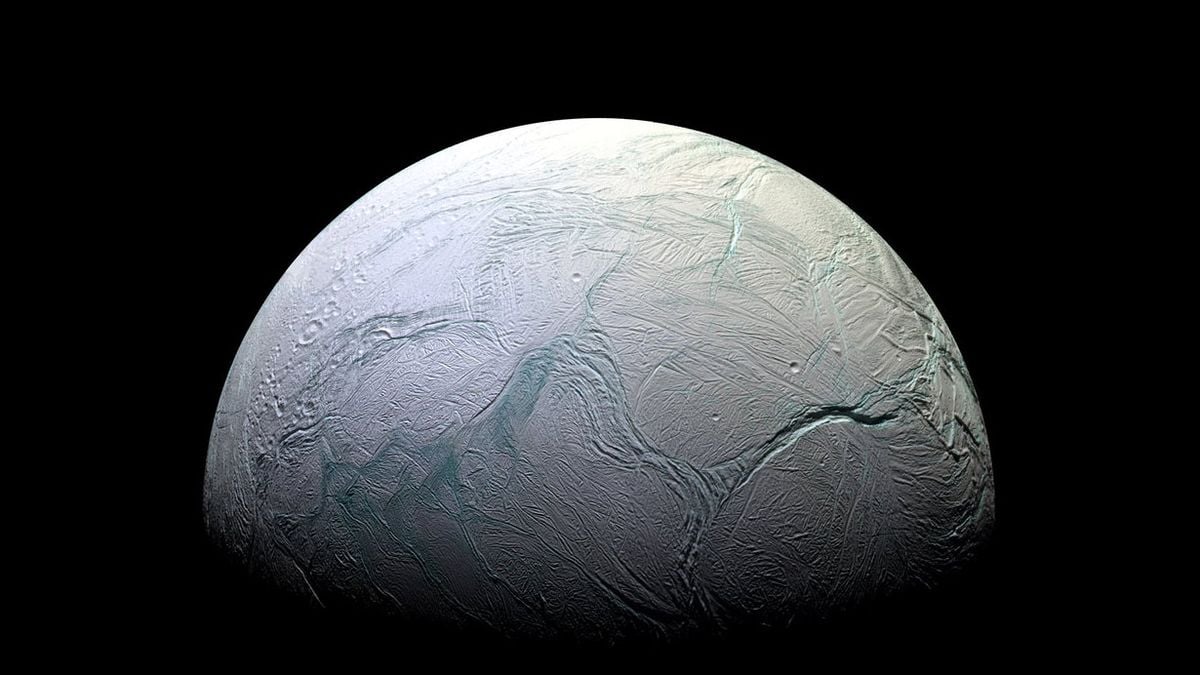
Planetary scientists from Freie Universität Berlin have published two new studies that indicate that a spacecraft could identify evidence of life much more easily than previously thought.
Source: www.universetoday.com

Conny Waters – AncientPages.com – Young adults, not families, drove migration in Bronze Age communities. Researchers analyzed skeletal samples from Greek archaeological sites to assess mobility during the Middle and Late Bronze Age. The results show that young people actively […]Read more at Ancient Pages
Source: www.ancientpages.com
NASA’s 2027 Human Lander Challenge is seeking ideas from college and university students to help address one of the most critical needs for sustained lunar exploration: reliable communications. As NASA prepares for long-term human presence on the Moon through the Artemis and Moon Base programs, communications systems will be just as important as spacecraft and […]
Source: www.nasa.gov

NASA will participate in the 77th International Astronautical Congress (IAC) in Antalya, Türkiye, from Monday, Oct. 5, to Friday, Oct. 9, highlighting America’s leadership in human exploration to the Moon and Mars, advancing responsible exploration under the Artemis Accords, world-changing science, and support for the commercial space sector. The IAC, organized by the International Astronautical […]
Source: www.nasa.gov

Jan Bartek – AncientPages.com – After years of research into ancient runes, archaeological findings, and naming practices, a prominent scholar has presented a study revealing an unexpected connection between Romans and Vikings. Previous studies have shown that Romans and Vikings […]Read more at Ancient Pages
Source: www.ancientpages.com

There’s an active debate in the astrobiology community of where to use our best telescopes to look for our best chance of seeing alien life. That debate has been going on for decades, and will continue for some time to come, but now there’s another option up for consideration. A new paper in the International Journal of Astrobiology by Dr. Christopher Doughty of Northern Arizona University talks about how the total amount of carbon a planet is able to bring into the service of biology is a good indication of how evolved life on it might be.
Source: www.universetoday.com