Category: Mistery

  • The Ghost of Columbus and the Impossible Geometry of the Piri Reis Map

    The Ghost of Columbus and the Impossible Geometry of the Piri Reis Map

    In 1929, while renovating the Topkapi Palace in Istanbul, a theologian discovered a fragment of gazelle skin that would rewrite the history of cartography. This was the Piri Reis map, a world chart compiled in 1513 by the Ottoman admiral and cartographer Piri Reis. While the map is famous for its early depiction of the Americas, a new wave of academic research is peeling back layers of mystery that suggest the map is even more "impossible" than previously thought. Using modern cartometric analysis and digital "mosaicking," researchers are finding that the underlying geometry of this 16th-century artifact mirrors a level of survey accuracy that defies the technology of the Ottoman era.The Piri Reis map was not merely a single drawing but a compilation of at least 20 different source maps. Among these, Piri Reis himself claimed to have used eight Ptolemaic maps, four Portuguese charts, and one "lost" map by Christopher Columbus. Because Columbus’s own nautical charts have never been found by modern historians, the Piri Reis fragment is often considered the only surviving "ghos


    Read Full Story

  • Renaissance Gallows Unearthed in France With 32 Executed Victims

    Renaissance Gallows Unearthed in France With 32 Executed Victims

    Archaeologists working in Grenoble, France, have made a chilling discovery that sheds light on the brutal religious persecution of the 16th century. The remains of a rare Renaissance-era gallows, along with at least 32 individuals who were executed and denied proper burial, have emerged from beneath the Boulevard de l'Esplanade. The site offers a haunting glimpse into the dark period of France's Wars of Religion, when public execution served as both punishment and warning to those who dared challenge authority.The Gruesome Story of Tyburn Tree, London's Infamous GallowsGrim Discoveries at Saxony-Anhalt Execution Site A Gibbet Emerges from the Flood PlainsThe excavation site sits on land gradually reclaimed from the flood-prone plains where the Isère and Drac rivers meet. For centuries, this marshy terrain remained on the outskirts of Grenoble, exploited for its sand and wood before eventually becoming integrated into the expanding city. Researchers from France's National Institute for Preventive Archaeological Research (INRAP) discovered a quadrangular masonry foundation measur


    Read Full Story

  • Black Gold: Sumerian Bitumen Recipes Worked Like Asphalt, 4,000 Years Ago

    Black Gold: Sumerian Bitumen Recipes Worked Like Asphalt, 4,000 Years Ago

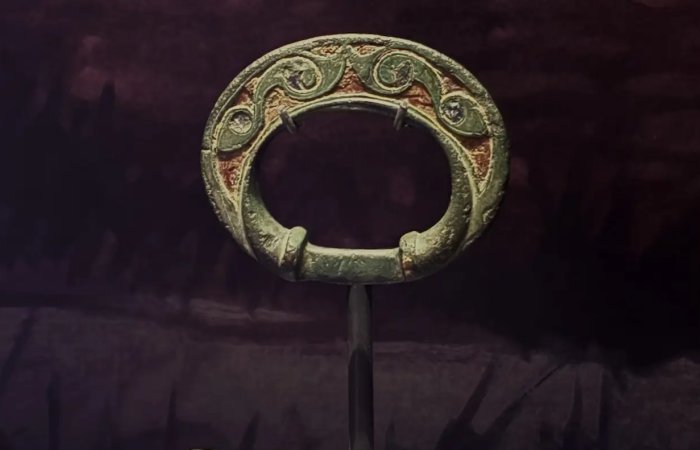
    Sumerian craftspeople in Mesopotamia didn’t simply scoop up natural bitumen and slap it on boats or bricks. A new materials study suggests they followed repeatable “recipes” that controlled strength, flexibility, and waterproofing in ways that look surprisingly familiar to modern asphalt engineering. The research focuses on Abu Tbeirah in southern Iraq and shows that additives such as plant fibers and mineral inclusions were not random contamination, but part of deliberate composite design. That finding helps explain how Sumer’s cities and trade networks functioned in a landscape of marshes, waterways, and mudbrick architecture.Why was Ancient Middle Eastern Bitumen Discovered in an Anglo-Saxon Boat Burial?4,000-Year-Old Mesopotamian Boat Near Uruk Rescued A study that reads bitumen like an engineerThe underlying substance is Sumerian bitumen: a naturally occurring petroleum material (often called an asphalt-like “black goo”) long associated with waterproofing and adhesion, and even with far-reaching trade. Readers may already know how bitumen shows up in un


    Read Full Story

  • The Ghost of Columbus and the Impossible Geometry of the Piri Reis Map

    The Ghost of Columbus and the Impossible Geometry of the Piri Reis Map

    In 1929, while renovating the Topkapi Palace in Istanbul, a theologian discovered a fragment of gazelle skin that would rewrite the history of cartography. This was the Piri Reis map, a world chart compiled in 1513 by the Ottoman admiral and cartographer Piri Reis. While the map is famous for its early depiction of the Americas, a new wave of academic research is peeling back layers of mystery that suggest the map is even more "impossible" than previously thought. Using modern cartometric analysis and digital "mosaicking," researchers are finding that the underlying geometry of this 16th-century artifact mirrors a level of survey accuracy that defies the technology of the Ottoman era.The Piri Reis map was not merely a single drawing but a compilation of at least 20 different source maps. Among these, Piri Reis himself claimed to have used eight Ptolemaic maps, four Portuguese charts, and one "lost" map by Christopher Columbus. Because Columbus’s own nautical charts have never been found by modern historians, the Piri Reis fragment is often considered the only surviving "


    Read Full Story